Nipple chafing in rain, heat and cold
Short answer
Rain and heat make nipple chafing worse because a soaked shirt clings, gets heavy and drags on softened skin. Cold makes it worse because nipples become erect and take more of the rubbing. In any of these, use a barrier that stays on when wet and a snug, quick-drying shirt.
Key takeaways
- Wet from rain or sweat, a shirt clings and drags, and damp skin breaks down faster.
- In the cold, erect nipples stand out into the fabric.
- Use a barrier that holds when soaked, not just lubricant.
- Carry a backup on long or wet runs.
On this page
Weather is one of the biggest triggers for nipple chafing. Rain and heat soak your shirt so it clings and drags on skin that is already softened by moisture. Cold makes nipples erect, so they push into the fabric and take more of the rubbing. In all three, the fix is the same: a barrier that stays on when wet, and a snug, quick-drying shirt.
Rain
A rain-soaked shirt is heavier and sticks to your chest, so it pulls across the nipple with each arm swing. Wet skin is also softer and breaks down faster.
- Use nipple covers or tape you have tested in the wet. Lubricant can wash off.
- Choose a fitted synthetic shirt that does not balloon with water.
- If you wear a rain shell, check that it does not rub on the chest.
Heat and humidity
On hot and humid days you sweat more, and in high humidity sweat does not evaporate, so your shirt stays soaked for longer.
- Apply your barrier to completely dry skin before you start sweating. Adhesive does not grip damp skin.
- Pick the lightest, fastest-drying shirt you own.
- On long runs, carry a backup such as a spare pair of covers or a small tub of balm.
Cold and wind
Cold air makes nipples erect, so they stand out and take more friction. Wind on a sweaty shirt chills the chest further. Cyclists see this often. See nipple chafing in cycling and surfing.
- Use a base layer that fits close to the skin under your outer layer.
- Cover your nipples even if you do not bother in summer.
Quick setup by conditions
| Conditions | Shirt | Barrier |
|---|---|---|
| Cool and dry, under an hour | Any technical shirt | Optional, lubricant is usually enough |
| Hot or humid | Light, fitted synthetic | Covers or tested tape, plus backup |
| Rain | Fitted synthetic that does not hold water | Covers or tape tested in the wet |
| Cold or windy | Close-fitting base layer | Covers or tape |
This guide is general information, not medical advice.
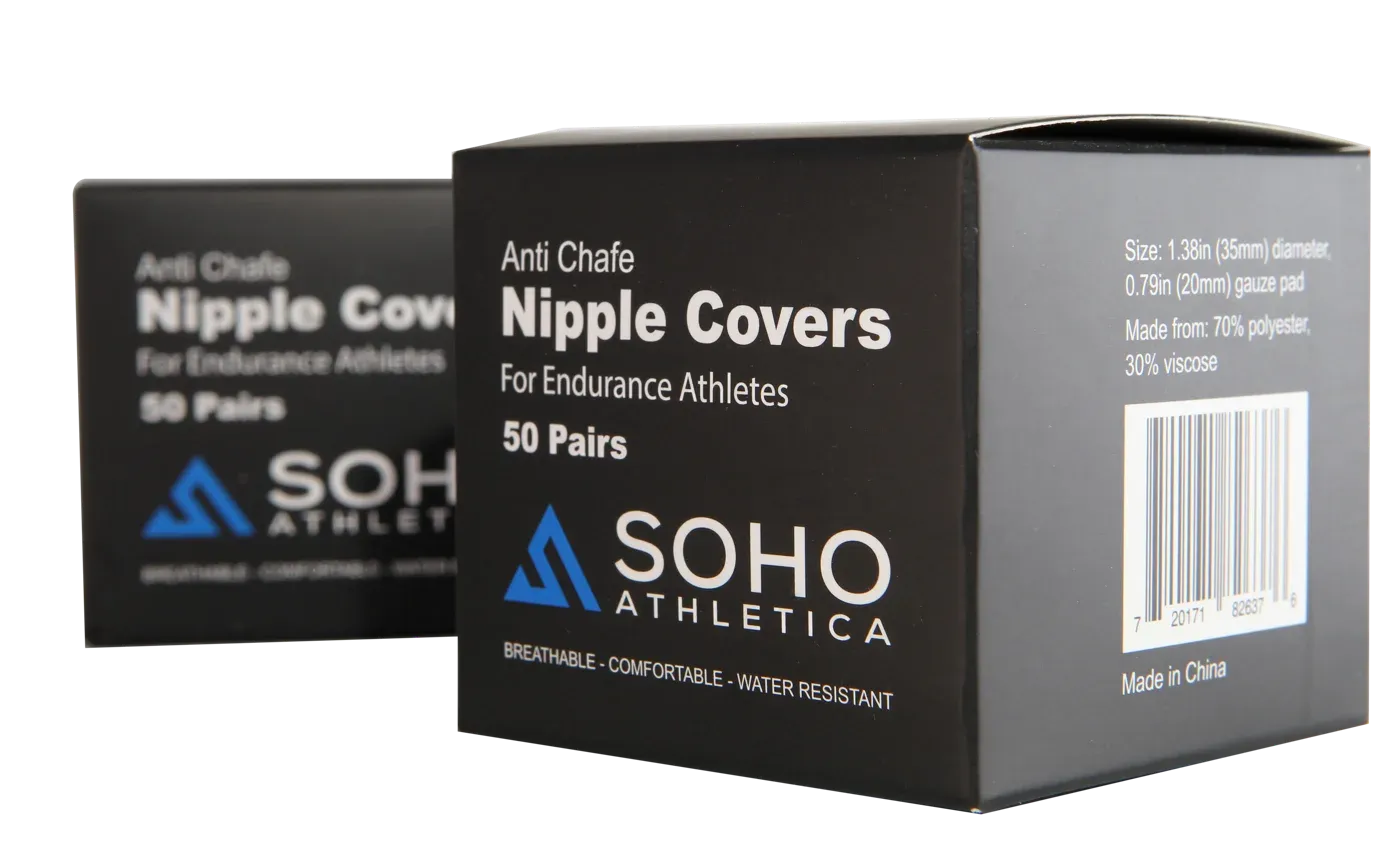
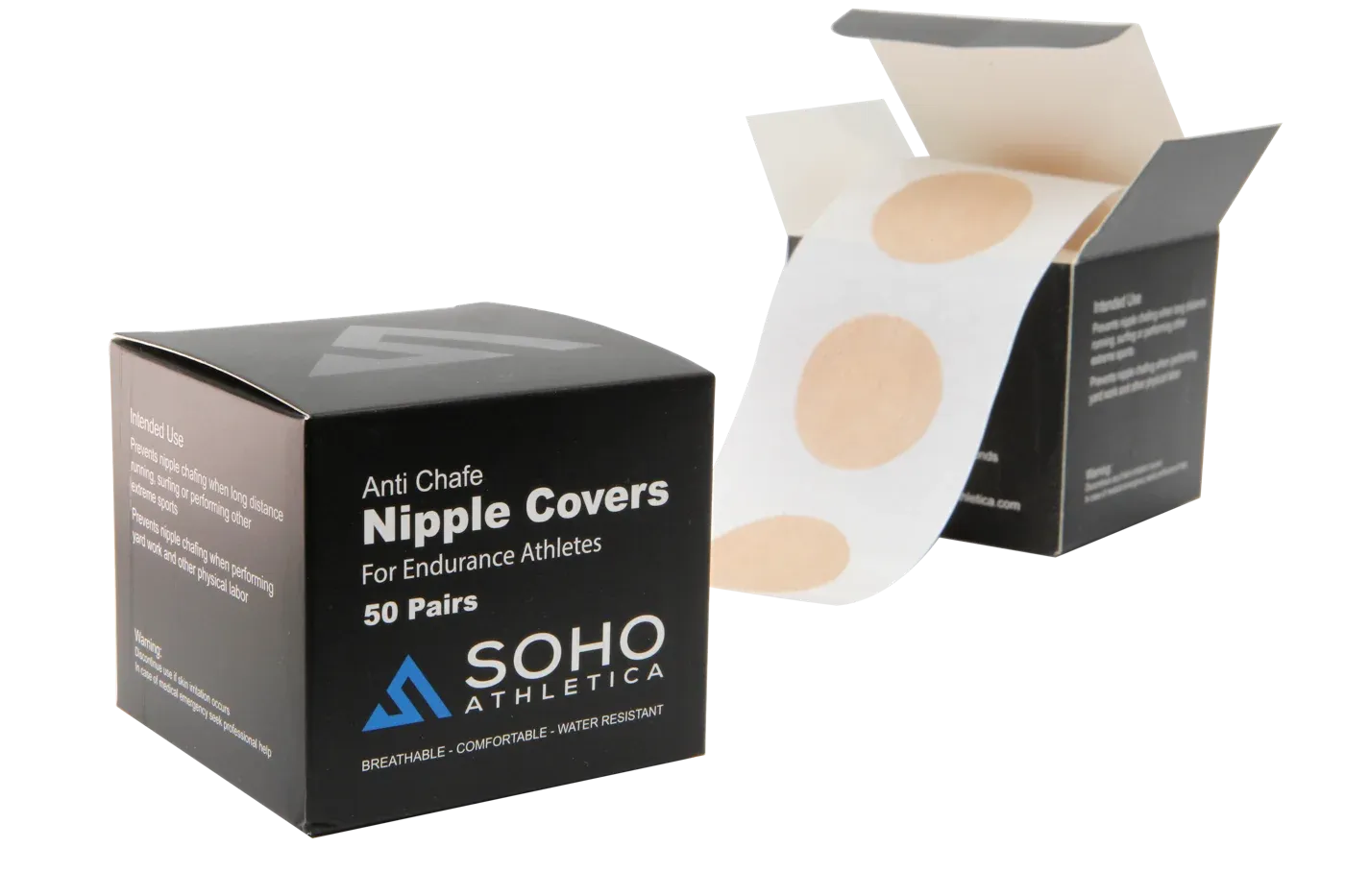
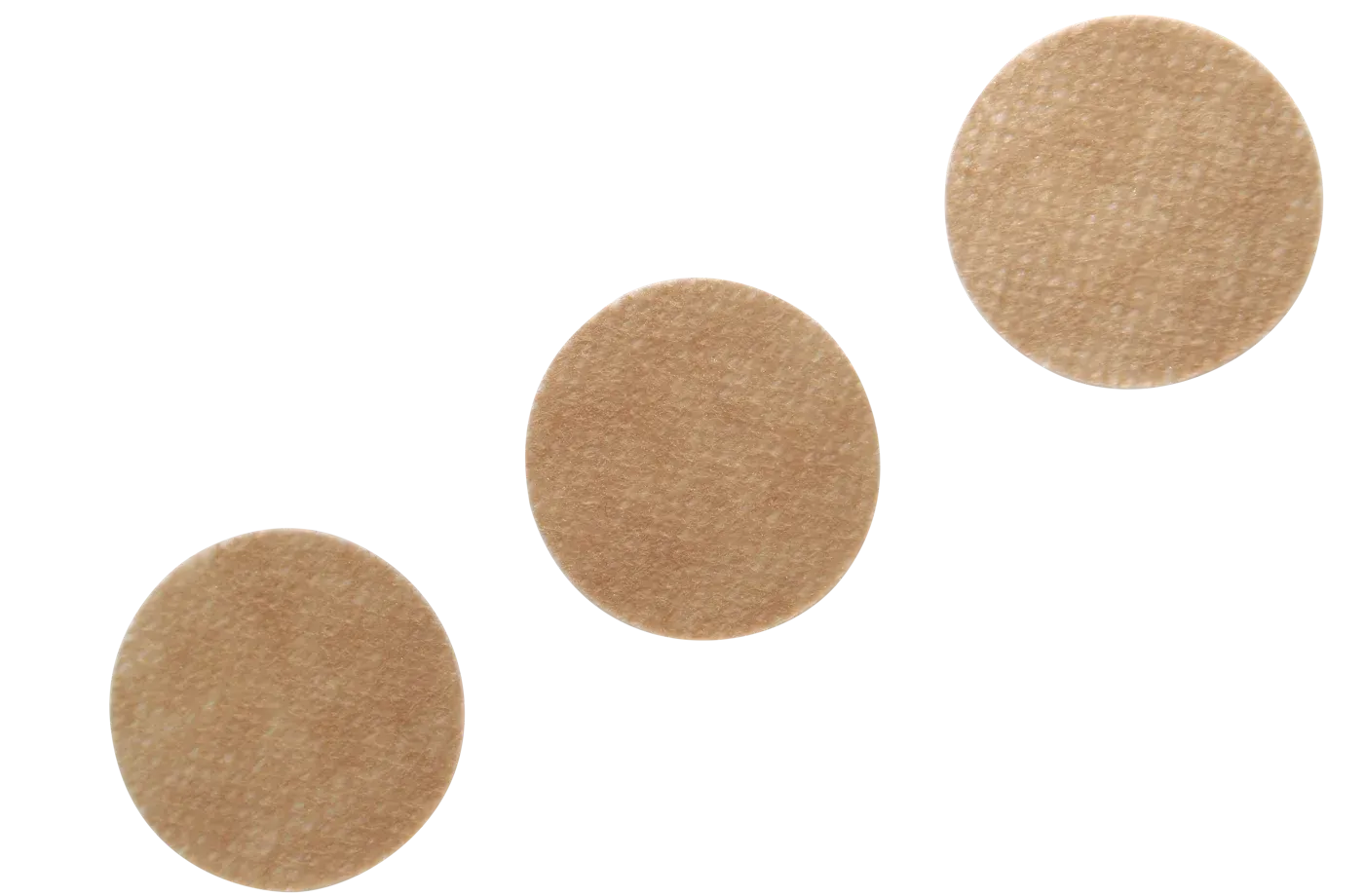
SOHO Athletica anti-chafe nipple covers
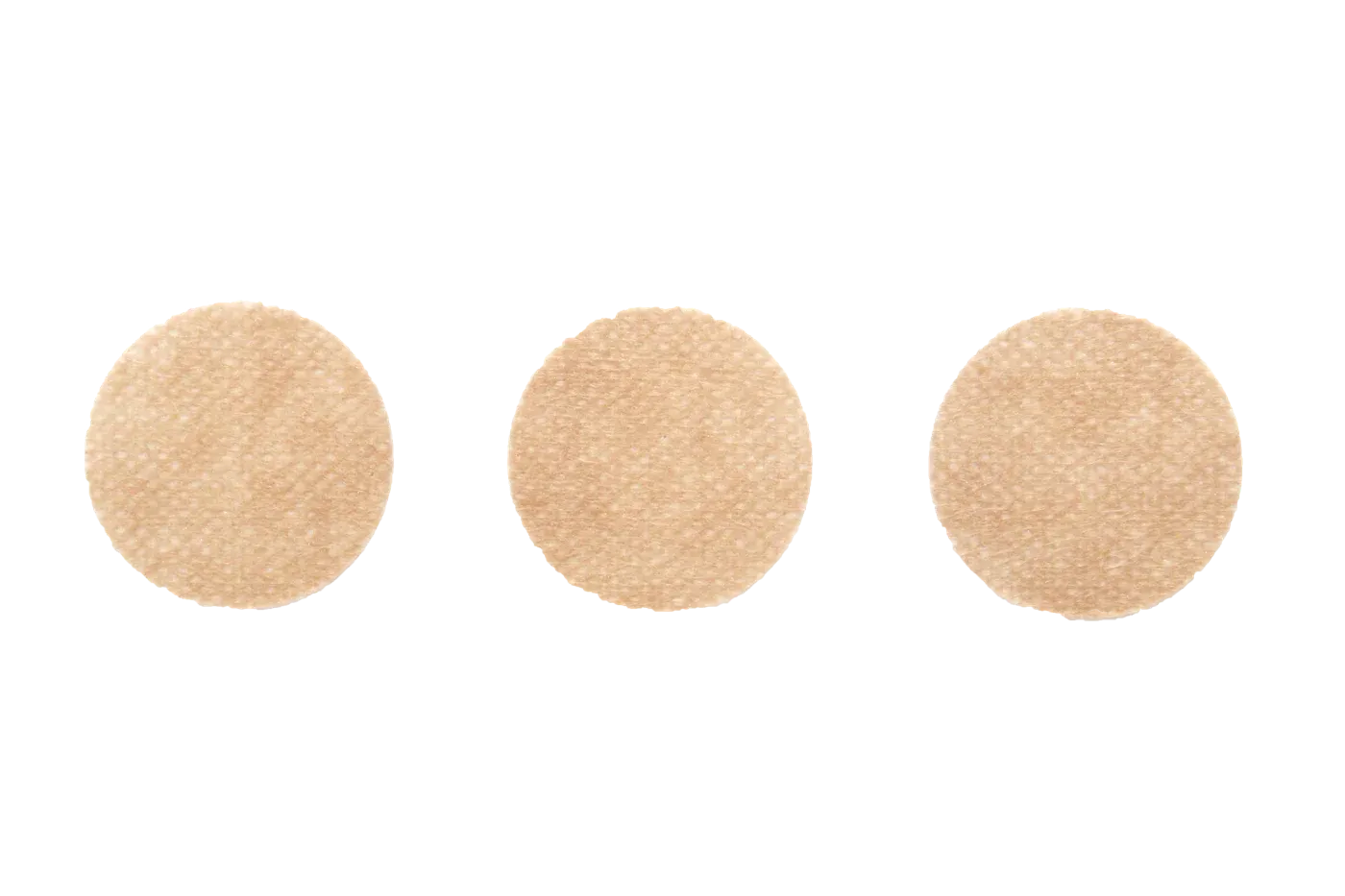
50 pairs per box. 1.38 in (35 mm) across with a 0.79 in (20 mm) gauze center pad. Breathable and water resistant.
Questions runners ask
Why do my nipples chafe more in the rain?
A wet shirt clings to your chest and drags across it with every stride, and wet skin softens and breaks down faster. Rain turns a mild rub into a painful one.
Does cold weather cause nipple chafing?
Cold air makes nipples erect, so they stick out further into your shirt and take more of the friction. Wind on a sweaty shirt adds to it.
What stops nipple chafing in humid weather?
A snug, moisture-wicking shirt plus a barrier over each nipple that stays on when soaked, such as nipple covers. Lubricant alone may wash away.
Sources
- Cleveland Clinic. What's jogger's nipple and how can you avoid it?. 2025-02-19.
- Cleveland Clinic. Chafing: how it happens and how to treat it.